

News and events
Reports, documents, and media coverage of the Environmental Board's project WOODMEADOWLIFE can be found on the project's Estonian website.
Various thematic events have also been covered through photos and videos on the project's Facebook page: Eesti pärandniidud.


The purpose and main activities
The aim of the project is to restore overgrown wooded meadows and carry out activities to improve the condition of the habitat and species.
read morelDuration
November 1, 2021 - December 31, 2026
Restoring and promoting a long-term sustainable management of Fennoscandian wooded meadows in Estonia and Latvia. Learn more about the project in Latvian on the Latvian Fund For Nature webpage here.
Partners
- Estonian Environmental Board (Lead Partner)
- Estonian Seminatural Communities Conservation Association
- Estonian Fund for Nature
- University of Tartu
- Estonian Academy of Arts
- Latvian Fund for Nature
- SERE - Society for Ecological Restoration Europe

Project areas
There are a total of 33 project areas in Estonia and Latvia, of which 25 project areas in Estonia are located in Saaremaa, Hiiumaa, Pärnu County, Lääne County, Lääne-Viru County, Rapla County, Tartu, and Valga County, and 8 project areas in Latvia.
See more information about the project areas below.
Financing
The total budget of the project is 6,697,642 euros, of which the participation of the Environmental Board is 3,756,9877 euros, and the participation of the partners is 2,940,765 euros.
The European Commission will finance the project with 75% or 5,023,229 euros, and the remaining funding will be covered by the project partners and the Environmental Investment Center.
The website reflects the views of the project and the European Commission cannot be held responsible for any use which may be made of the information contained therein.

|

|

About wooded meadows
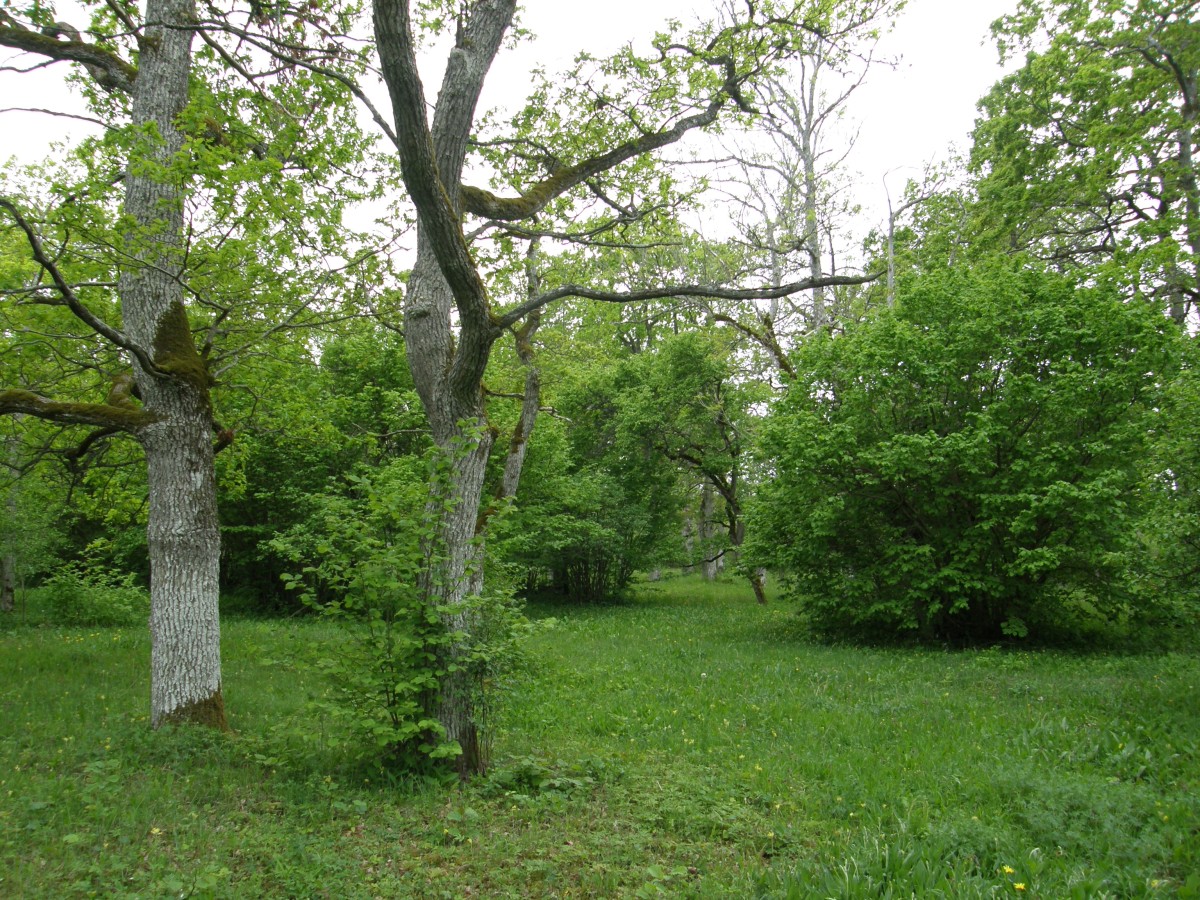
Meadows rich in flowers and birds have been a characteristic part of Estonian and Latvian landscapes for centuries. At a time when most of the population lived in the countryside, pastures were needed to graze the animals and meadows to obtain winter fodder. In this way, various semi-natural meadows were formed over a long period of time, including beautiful and species-rich wooded meadows. Wooded meadows are areas with regularly mowed natural herbs and sparse trees and shrubs, where the sunniest open areas alternate with individually growing trees and more shady groups of trees. It is these diverse conditions that help woodlands to maintain an exceptional species richness. Plant species with very diverse demands grow side by side and are also associated with extremely rich insect and soil fauna and birds.
Today, disused wooded meadows have largely become overgrown, and their area has shrunk to almost non-existent throughout Europe. Today, unfortunately, wooded meadows are no longer important on farms, but they continue to be an extremely important habitat for rare animal and plant species, carrying the values of both open meadows and forests. Wooded meadows are also carriers of great species richness - more than 70 different plant species can grow on one square meter, which is also very special on a global scale.
Estonian and Latvian wooded meadows make up about 60% of all wooded meadows in the boreal region.
-
In 2021, 1,100 ha of wooded meadows were maintained, 1100 ha in Estonia, and 343 ha in Latvia, which is not enough to ensure the long-term preservation of these species-rich habitats. According to the "Action Plan for Semi-Natural Meadows 2021-2027" and the Latvian Natura Financing Action Plan (PAF), the goal is to maintain 2,000 ha of wooded meadows in Estonia and 992 ha in Latvia by 2027.
-
In order to increase the maintenance area of wooded meadows in both countries and to help ensure the preservation of natural values in the future, a LIFE project has been launched with the support of the European Union, one of the goals of which is to restore overgrown areas.

The aim of the project is to restore overgrown wooded meadows and carry out activities to improve the condition of the habitat and species.
In addition to improving the condition of wooded meadows, the project aims to promote the sustainable maintenance of wooded meadows, monitor the effectiveness of the project, and increase public awareness of the natural and cultural heritage of wooded meadows and their protection and management.
You can find a more detailed list of activities below.
In the course of the project, it is planned to restore overgrown wooded meadow areas on a total of 700 hectares - 500 ha in Estonia and 200 ha in Latvia. Restoration of wooded meadows usually lasts 1–3 years, and the restoration must be carried out in such a way that it is possible to mow in the future. Restoration activities include the removal of shrubs, the reduction of the connectivity of the tree and shrub layers, and milling.
In addition to restoration, it is necessary to install culverts or fill roads in gravel in some project areas to gain access to the area.
After restoration, it is essential to maintain the wooded meadows every year - to mow them and remove the mown grass from them - consistent and long-term maintenance is key to the recovery of habitats and the conservation of species.

Awareness raising is also one of the main goals of the project. It is planned to organize information seminars, study days, and work campaigns on wooded meadows and to introduce the project activities and events also through social media. Demonstration days of restoration and maintenance equipment are planned. Also, given the practice of restoring wooded meadows, also the current management guidelines must be updated.
The aim of the project is to carry out various works to improve the habitats of rare species of wooded meadows in the project areas, including:
- beetle nest boxes;
- bat nest boxes;
- sowing seeds to speed up restoration.

The involvement of landowners, maintainers, and restorers in project activities are very important. For this purpose, round tables and events introducing the project to local communities, a trip to the project areas, and thanksgiving events for the maintenance of the wooded meadows have been planned during the project.

Demonstration days of restoration and maintenance equipment are planned. Also, given the practice of restoring wooded meadows, it is planned to update the current management guidelines.

It is planned to collect the heritage related to the management of wooded meadows and create a nature education outdoor exhibition, and publish a book on the cultural heritage of wooded meadows.

The project will carry out regular monitoring of the project's effects on wildlife and the socio-economic situation.

Areas with high restoration potential have been selected in cooperation with experts.
There are a total of 33 project areas in Estonia and Latvia, of which 25 Estonian project areas are located in Saaremaa, Hiiumaa, Pärnu County, Lääne County, Lääne-Viru County, Rapla County, Tartu County and Valga County. Project activities are planned on private land.
The Environmental Board will contact the landowners remaining in the planned restoration areas to find out their readiness to participate in the project.
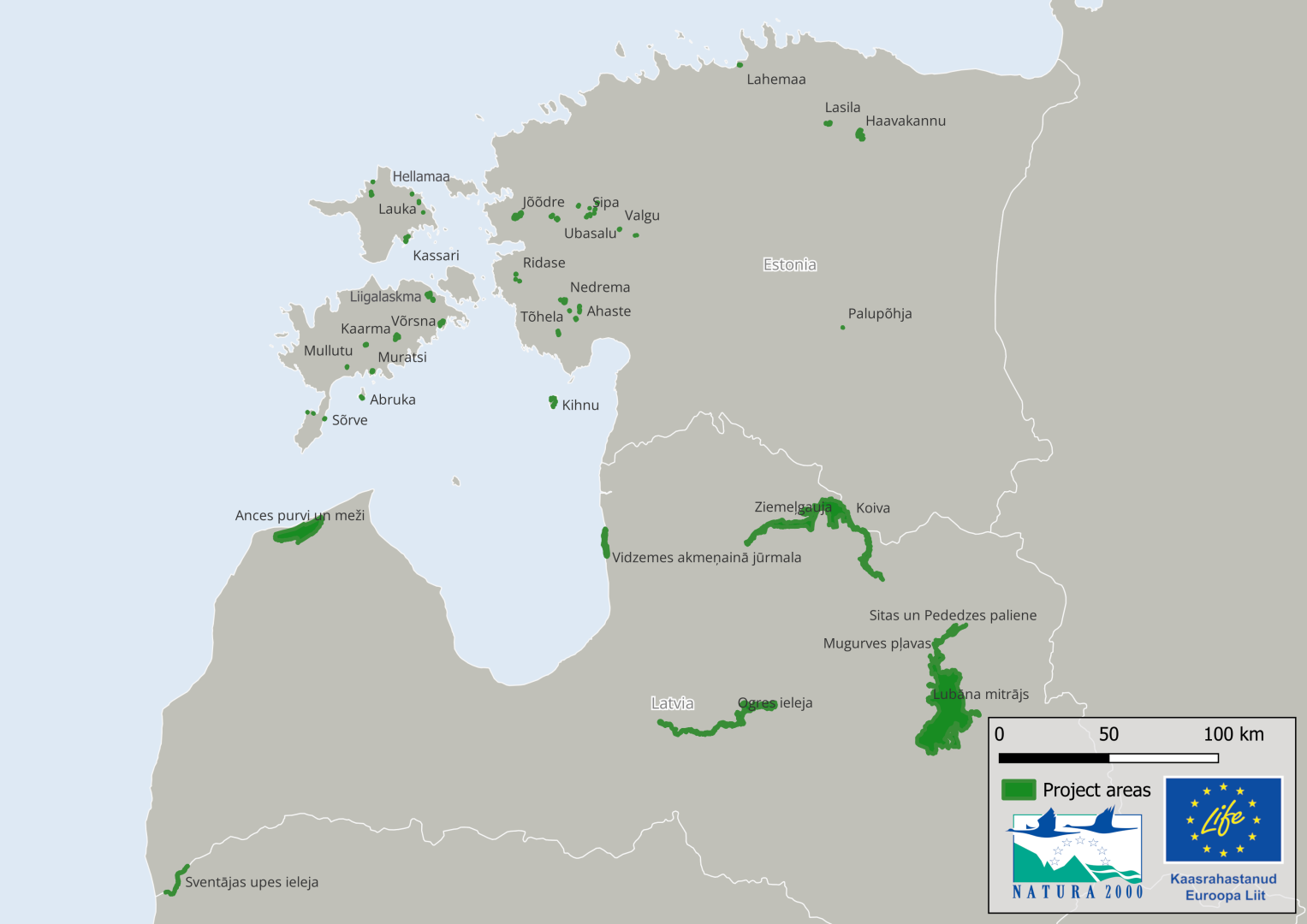
County | Project area | Protected natural objects covered |
| Lääne-Virumaa | Haavakannu Lasila Lahemaa | Haavakannu Nature Reserve Lasila Nature Reserve Lahemaa National Park |
| Tartumaa | Palupõhja | Alam-Pedja Nature Reserve |
| Valgamaa | Koiva | Koiva-Mustjõe Landscape Conservation Area |
| Pärnumaa | Kihnu Tõhela Ahaste Nedrema Ridase | Kihnu Limited Conservation Area Nätsi-Võlla Nature Reserve Nätsi-Võlla ja Lavassaare Nature Reserve Nedrema Nature Reserve Karuse-Linnuse Limited Conservation Area |
| Läänemaa | Jõõdre Ubasalu | Ehmja-Turvalepa Limited Conservation Area Marimetsa-Õmma Limited Conservation Area |
| Raplamaa | Sipa Valgu | Angasilla, Paeküla, Rangu, Maidla-Iganõmme Limited Conservation Areas, Iganõmme Landscape Conservation Areas, Sulu and Paisumaa Limited Conservation Areas |
| Hiiumaa | Lauka Hellamaa Kassari | Kõrgessaare-Mudaste and Pihla-Kurisu Limited Conservation Areas Käina lahe-Kassari Landscape Conservation Area Pühalepa, Kuri-Hellamaa ja Luhastu Limited Conservation Area |
| Saaremaa | Liigalaskma Saaremetsa Võrsna Kaarma Muratsi Abruka Mullutu Sõrve | Tumala and Liigalaskma-Orinõmme Limited Conservation Areas Kingli and Saaremetsa Limited Conservation Areas Võrsna Limited Conservation Area Kaarma Limited Conservation Area Kasti lahe Limited Conservation Area Abruka Limited Conservation Area Mullutu-Loode Limited Conservation Area Ranna, Kaugatoma-Lõu and Lindmetsa Limited Conservation Areas |
Explore the project areas and areas with high restoration potential online in an interactive heritage mapping map application.
Short film completed on British environmental experts' summer visit to Estonian wooded meadows
The short film created by Jack King documents a three-day study visit by UK environmental and agricultural experts in early summer to Järise, Saaremetsa, Nedrema, and Laelatu wooded meadows. You can watch the film here.
Eesti Loodus Photo Contest Special Prize
For the third year, WoodMeadowLIFE awarded the "Wooded Meadows Carrying Our Heritage" special prize, won by Andres Papp for his night photo „Linnutee“, taken at Tõramaa wooded meadow in April.
The awards gala was held at the Tallinn Zoo Environmental Education Center on November 5.
Webinar: "Mapping Nature Restoration in LIFE Projects: Overview of Work Done and Next Steps"
At the European Commission LIFE network webinar held on October 27–28, University of Tartu researcher Triin Reitalu shared the WoodeMeadowLIFE project's experiences in managing geospatial data. The discussion focused on the long-term reuse of restoration data for implementing EU environmental policy.
WoodMeadowLIFE projcet introductory video "Species-Rich Wooded Meadows Carrying Heritage" completed
Released at the end of October in collaboration with Tammik Film OÜ, this eight-minute short film is available in Estonian and English. It introduces the natural values, restoration works, and landowners' contributions across wooded meadows in Lääne, Pärnu, Rapla, and Tartu counties.You can watch the movie in english and in estonian.
An exhibition dedicated to wooded meadows opens in Riga
On October 22, the exhibition "A Journey to Marsi. An Artist Enters a Wooded Meadow," created in collaboration between the Latvian Fund for Nature and artists, opened at the Latvian National Museum of Art. Large-format photographs and works by eight Latvian artists and art groups showcased the values of Marsi wooded meadow in the Northern Gauja region.
Riin Alatalu's lecture "Living Heritage and Traces of Heritage in Wooded Meadows"
On October 8, Estonian Academy of Arts Associate Professor Riin Alatalu gave an English-language lecture as part of the UNESCO Chair series: "Living Heritage and Traces of Heritage in Wooded Meadows." The lecture explored EKA students' work and the background of Estonia's bid to include wooded meadows on the UNESCO World Heritage List, highlighting how living traditions and traditional working practices help preserve these unique ecosystems.
Riin Alatalu is an Associate Professor at the Department of Cultural Heritage and Conservation of the Estonian Academy of Arts.
Wach the lecture here.
Nordic-Baltic LIFE platform meeting brought the conservation community together in Lahemaa
From September 8–10, representatives of regional LIFE projects gathered in Lahemaa National Park under the main theme "Human Meets Nature." Part of the meeting included practical field trips to project sites. A joint excursion by the WoodMeadowLIFE and Loodusrikas Eesti projects introduced the restoration of semi-natural grasslands and small waterbodies, alongside biodiversity-supporting activities in agricultural landscapes in Lääne-Viru County. As part of the WoodMeadowLIFE project, we visited the 211-hectare wooded meadow complex in Haavakannu Nature Reserve, where 15 hectares were restored in early 2025. During the restoration, new habitats were also created for bats and saproxylic insects, and meadow plant seeds were sown to accelerate ecosystem recovery. The visit was made especially valuable by meeting the landowner, who shared practical insights into managing the area.
Danish students learned about Estonian nature conservation and habitat restoration
From August 27 to September 5, a group of forestry and landscape architecture students from the University of Copenhagen visited Estonia, including trips to Järise and Nedrema wooded meadows. The study trip compared Estonian and Danish nature conservation systems and explored restoration and maintenance techniques.
Wooded meadows were represented at the European restoration conference
WoodMeadowLIFE project partners from the University of Tartu presented their research at the 15th European Conference on Ecological Restoration (SERE 2026) in Brest, France (August 24–28), held under the theme "Plan for Tomorrow, Restore Now!"
In the open ecosystem restoration session, Associate Professor Triin Reitalu discussed Estonian wooded meadows as biodiversity hotspots, showing that while species richness rises quickly after restoration, recovering a characteristic species composition takes longer.
The next SERE conference will take place in Liverpool, England, in 2028.
Exploring Raplamaa’s Species-Rich Wooded Meadow and Discovering the rare plant spiecies on Open Farm Day
On July 25, as part of the 12th Open Farm Day, visitors explored the species-rich Iganõmme wooded meadow in the Maidla-Iganõmme Protected Area in Rapla County. Guided by WoodMeadowLIFE project specialists and landowner Veiko Ülejõe, participants learned about the meadow's biodiversity as well as both modern and traditional management practices.
Visitors had the chance to try scything, inspect grassland maintenance machinery, weave flower crowns from meadow plants, and hear locals share memories of the meadow's importance as a source of useful plants for their ancestors. During the botanical walks, several protected species were spotted (including orchids and the rare Dianthus superbus), and a significant first record was made: the endangered Pedicularis sceptrum-carolinum, was discovered at Iganõmme wooded meadow for the very first time.
Wooded meadow excursions highlighted the species richness of Estonian nature
As part of the WoodMeadowLIFE project and Nature Conservation Month ("Discover Estonia!"), the Environmental Board hosted two guided walks in May and June to showcase Estonia’s most biodiverse semi-natural habitats.
On May 24, during a European Day of Parks walk at the Saaremetsa–Kingli wooded meadow in Saaremaa, guide Sirje Azarov introduced the local flora and trees, including the Tree of the Year—the European aspen. Afterwards, locals shared memories of traditional haymaking and how wooded meadows once provided mushrooms, nuts, berries, and medicinal plants.
On June 6, at the Nedrema wooded meadow in Pärnu County—one of Estonia’s largest managed wooded meadows at nearly 80 hectares—participants identified 99 plant species (including seven orchids) with botanist Toomas Kukk, followed by an evening bird walk with amateur ornithologist Andrus Jair. As part of the 9th Estonian Nature Observations Marathon, Nedrema set an all-time site record with 846 species recorded, including the discovery of a new species for Estonia (Peronospora variabilis).
The new semi-natural grasslands newsletter has been published
Published in early June, the eighth electronic newsletter reminded managers of the maintenance subsidy application round open until June 15. It also compiled an overview of summer semi-natural grassland events and called for nominations for the 2026 Best Semi-Natural Grassland Manager title. The newsletter can be found on the Loodusrikas Eesti project website.
Estonian Nature magazine's photo contest invites participants to capture wooded meadows
In early June, the Estonian Nature (Eesti Loodus) photo contest was announced, accepting submissions from July 1 to September 30. For the third time, the WoodMeadowLIFE project awarded a special prize titled "Wooded Meadows Carrying Our Heritage“.
WOODMEADOWLIFE project partners met in Rapla County
On May 12–13, Estonian and Latvian partners gathered in Rapla County to assess the project's progress and visit restored wooded meadows in the Sipa project area. On the second day, a thorough overview of achieved results and plans for the final project year was presented to the project's monitoring expert.
Practice mowing with a scythe at the Estonian Fund for Nature Summer School
In early May, volunteers and nature enthusiasts were invited to the 13th ELF Summer School held from July 9–12 in Palupõhja, Alam-Pedja Nature Reserve. The event focused on mowing the restored Palupõhja wooded meadow by hand with a scythe and sharing practical maintenance techniques and experiences.
Exchanging experiences at the final conference of the Czech One Nature LIFE project
At the conference held in the Czech Republic on April 22–23, project manager Heidi Öövel shared Estonia's experiences in engaging landowners and selecting restoration areas. On the second day, participants visited protected areas to inspect habitats created for beetles and butterflies.
Maintaining wooded meadows presents numerous challenges
At the end of March, an interim summary was published based on interviews conducted by University of Tartu Master's student Saskia Meeri Eliis Lee with 20 wooded meadow managers across Estonia.
An initial analysis of the interviews shows that the challenges associated with maintaining wooded meadows are primarily practical and stem from the specific characteristics of each site. Key factors include the time-consuming nature of the maintenance work, as well as the need for specialized skills and strong adaptability from the managers.
The Estonian Academy of Arts Showcased Wooded Meadow-Inspired AR Games and a Heritage Exhibition at Tourest 2026
At the Tourest 2026, held from February 13–15 in Tallinn, visitors could explore augmented reality (AR) games created by international students at EKA's EVA Lab. Based on natural science data, the games from the „Väikesed elud“ ("Little Lives") project (available on Google Play and the Apple App Store) brought a virtual wooded meadow environment directly around the player.
In addition, the EKA UNESCO Chair on Cultural Heritage Studies presented the exhibition "Estonian Heritage on the World Map." These activities were linked to the WoodMeadowLIFE project, through which EKA researches the heritage of wooded meadows and supports their nomination for the UNESCO World Heritage List.
Estonia submitted an initial application to UNESCO to add wooded meadows to the World Heritage List
In mid-September, the Ministry of Climate submitted an initial proposal to UNESCO to nominate Estonian wooded meadows for the World Heritage List. By early November, UNESCO confirmed that the proposal meets all necessary criteria and invited Estonia to discuss the next steps. Although Estonia first put wooded meadows on its waiting list back in 2004, the effort was revived after a long pause thanks to the Estonian-Latvian restoration project WoodMeadowLIFE.
Eesti Loodus Photo Contest Special Prize
For the second year, WoodMeadowLIFE awarded the "Wooded Meadows carrying Our Heritage“ special prize, won by Tauri Tammeleht for his photo „Hiiglased udus“ (Giants in the Mist) taken in Soomaa.
Manager Interviews Launched
University of Tartu Master’s student Saskia Meeri Eliis Lee, in cooperation with PKÜ, began interviewing wooded meadow managers to assess the long-term sustainability of maintenance and support measures.
WoodMeadowLIFE Shared Restoration Experiences and Initial Monitoring Results at the RMK Nature Conservation Conference.
On October 30–31, the third RMK Nature Conservation Conference, "Habitat Restoration and Protection," took place in Saaremaa. In the semi-natural grasslands session, Tiit Hallikma from the Environmental Board shared the WoodMeadowLIFE project's practical restoration experiences, while University of Tartu researcher Triin Reitalu presented the initial monitoring results on wooded meadow biodiversity. The project was also featured in a poster presentation; the conference agenda and abstracts are available on the RMK website.
Practical Steps to Restore Biodiversity in Wooded Meadows
Inspired by ideas from Sweden and Romania, the WoodMeadowLIFE project carried out several practical actions in 2025 to help nature recover faster.
Young trees at Kolme-Jaagu (Pärnu County) and Ärma (Saaremaa) were veteranized to mimic old-tree habitats, while 21 wood boxes were installed across Estonia for birds and deadwood-dependent insects. In addition, bat boxes were set up in four wooded meadows, and meadow plant seeds were sown in two areas to help the plant cover grow back.
A Nordic-Baltic LIFE project meeting took place in Sweden
From September 9–11, Nordic and Baltic biodiversity LIFE projects gathered in Sweden, where the Environmental Board was represented by WoodMeadowLIFE and LIFE-IP Loodurikas Eesti project. During the three-day meeting, participants reviewed updates to reporting requirements, visited local restoration sites, and shared experiences of their projects' achievements. The next regional meeting will take place in Estonia in 2026.
Study Trip to LIFE ROsalia in Romania
In Sptember WML project partners visited Putna-Vrancea National Park in Romania to exchange practical knowledge on restoring habitats for saproxylic beetles. The exchange of experiences between the two projects began in autumn 2024, when the LIFE ROsalia team visited Estonia to learn about our wooded meadow restoration activities and see the wooded meadow along the Koiva River, which is home to Osmoderma eremita.
Latvian and Lithuanian Colleagues Visited WoodMeadowLIFE Project Sites
On August 26–27, colleagues from the Latvian and Lithuanian LIFE Osmoderma project visited project sites on Abruka, Saaremaa, and Ridase to exchange best practices on restoration, pollinator monitoring, and beetle/bat nest boxes.
Seminar on the Tourism Potential of Wooded Meadows
The seminar took place on August 6 as part of the Puisniidupank seminar series organized by the Estonian Fund for Nature (ELF). It included a field visit to Mario Talvist’s wooded meadows in Saaremaa and a discussion in Tornimäe on developing semi-natural grassland tourism. Launched in 2025, the Puisniidupank series is designed primarily for wooded meadow managers looking to exchange knowledge and improve their management practices in ways that benefit both people and nature.Open Farm Day Held at Iganõmme Wooded Meadow for the First Time
On Saturday, July 12, visitors were welcomed to Iganõmme wooded meadow in Rapla County, where — together with the meadow owners Veiko and Ulve and the WoodMeadowLIFE project team—they explored the site's natural values, semi-natural landscape management, and project activities. Botanists recorded around 160 vascular plant species, including new local discoveries of the Cephalanthera rubra and Dianthus superbus.
Bird Morning at Neitsimäe Wooded Meadow
On July 11, a nature excursion took place at the restored Neitsimäe wooded meadow in Hiiumaa as part of the Hiiu Folk festival. With the help of the guide Leho Aaslaid and mobile apps, participants identified 21 bird species. At the wooded meadow, landowner Harry shared nearly 30 years of restoration and management experience through engaging stories.
We invite everyone to celebrate Seminatural Grassland Day!
Now is the time when the our ancestors gathered plants, made a fire and prepared for the fast hay season. This is also the time when Estonian meadows are in their most beautiful and flowering . It is for these reasons that we are celebrating Seminatural Grasslands Day for the third time - to value and evaluate the importance of Estonia's most bio-rich communities in preserving the diversity of Estonian nature as well as Estonian cultural history and identity.
In the afternoon, you can try your hand at mowing with a scythe, as our ancestors did. The beauty of the wooded meadow can be enjoyed on a short ride with horses.
July 11, at 16:00 - 19:00
Place: Juurimaa stable, Raplamaa
- Gathering and greeting
- Nature and lore of heritage meadows
- Teaching and practice of mowing with a scythe - under the guidance of Priit Kuke
- Horseback riding on wooded meadows - guided by Juurimaa stable
WoodMeadowLIFE project together with partners hosted in Pärnu County international conference about wooded meadows.Toghether 80 guests from Latvia, Lithuania, Sweden, Finland, Belgium, the Czech Republic, England and Estonia.
Estonia was the best place for the meeting, as almost half - 42% - of the Fennoscandian wood meadows /6530*) of the boreal region are located here. With the conference, we also celebrated the theme year of wooden meadows in Estonia, and this was also the best time to see and show our meadows blooming. Over the three days, we shared our experiences of restoring and maintaining wooded meadows, visited Estonia's most famous wooded meadows - Nedrema and Laelatu, and heard about the condition of wooded meadows in our neighboring countries and further.
All presentations are available on the conference website - Conference "Keeping wooded meadows - Nordic-Baltic practices" | Keskkonnaamet
On European Day of Parks we met in Saaremaa to explore the wooded meadows of Viidumäe. The theme this year was preserving the heritage - builiding on our roots. Since wooded meadows are very important carriers of heritage, being part of the traditional landscape of Estonia and the cultural history of the people, WoodMeadowLIFE project also invited people to get to know the history and tradition of wooded meadows in one of the unique regions of Estonia. Local biologist Triin Reitalu and her mother Mari Reitalu shared stories and reminiscences about history, changes in the maintenance of the wooded meadow over time and species richness.
04.04.2023 the representatives of the Environmental Board and the Private Forestry Association and various forest cooperatives met at the restored wood meadow of the Nedrema nature reserve. Since many forest owners also have overgrown wood meadow areas, we introduced the content and possibilities of the WoodMeadowLIFE project.
The range of topics discussed in the case of wooded meadows was really wide - the role of landowners as the owner of the wooded meadow and participating in the project, the values of the wooded meadow, the structure of the stand, grazing vs. mowing, practical restoration techniques, support systems and amounts, problems regarding selling the wood.
WoodMeadowLIFE kickoff-meeting 17.03.2022
On March 17 of 2022, the opening meeting of WoodMeadowLIFE took place in Pärnu County, setting cooperation goals for the next five years. At the opening meeting, the project partners introduced the activities of both Estonia and Latvia in the coming years. Representatives of caregivers' authorities also attended. The cooperation provided answers to a number of practical questions and inspiration for the future.
Project information day 09.05.2022
On May 9th, a project information day was held at the Penijõgi office of the Environmental Board in Pärnu County, where we introduced the activities, content and conditions of the WoodMeadowLIFE project. We also shared information on how to join the project.
Project steering group meeting 24.05.2022
On May 24th, a meeting of the WoodMeadowLIFE steering group was held in Laelatu, where project manager Heidi Öövel gave the members an overview of the project activities and situation. The project experts also introduced the species values of the Laelatu wooded meadow to the Latvian partners.
Meeting of project experts 25.05.2022
On May 25th, meadow and forest experts from the project gathered to discuss the possibilities of restoring wooded meadows. The most important keywords were values, cooperation and landowners. In other words, it is important that valuable species of both forest and meadow communities are preserved when planning restorations on old overgrown wooded meadows. This requires experts to work with each other as well as with the landowner, who will carry out the recommended activities and later maintain the site.
Concert-picnic in Nedrema 28.05.2022
On May 28, the Nedrema Nature Reserve celebrated its 30th anniversary. The WoodMeadowLIFE project organized a concert picnic. We reflected on and talked about the tradition of wooded meadows, what role wooded meadows used to play in the life of peasants and how things are now. Rändaja performed.
Life bridging to Gap final seminar in Sweden 31.05-02.06.2022
Life bridging to Gap final seminar in Sweden
Celebration of semi-natural grasslands day 02.07.2022
Celebration of semi-natural grasslands day
Training of wooded meadow restoration 23.07.2022
Training of wooded meadow restoration in Saaremaa.
Project information day in Kihnu 15.09.2022
On 15.09.2022, the information day of the WoodMeadowLIFE project tokk place in Kihnu. We gave an overview of the wooded meadow restoration project, its purpose and activities, also answered the questions of locals and landowners.
Wooded meadows training in Muhu, 22.11.2022
22.11.2022 WoodMeadowLIFE restoration training was carried out in Muhu. The training had two parts - theoretical and practical. The more theoretical part about the ecology, history and values of the wooded meadowof was introduced by Jaak-Albert Metsoja. The second half of the training was spent outside and participants got to know the ongoing restoration of the LIFE connecting meadows in the project area of Muhu. At the wooded meadow being restored by Muhu Varahaldus, Erkki Noor introduced the area and also talked about the landowner's wishes regarding the restoration.
Results


Last updated: 24.11.2026


